Small Flats, Solid Wood: Scaling Timber Furniture to a Compact UK Home
Small flats have a reputation problem with solid wood. The assumption is that timber is bulky, dark and designed for houses with spare reception rooms. In practice, the opposite can be true. A well-scaled oak table, a slim ash console or a bed with visible legs can give a small UK flat the one thing flat-pack rarely manages: a sense of permanence without visual clutter.
Begin with the floorplan, not the furniture
Before you fall for a dining table online, measure the room as if you were drawing it. You need three numbers: the longest clear wall, the distance from the door to the opposite wall, and the width of your main walking route. Write them down in centimetres. Then mark door swings, radiators, sash windows and any awkward chimney breast on the floorplan.
Use masking tape to outline the piece on the floor. Live with the outline for a day or two. Can you open the oven, pull out a chair, reach the window? A simple test: if you have to turn sideways to pass, it is too big. Aim for at least 75–90cm of clear route in the busiest part of the flat. In a studio, that route often runs straight through the middle, so keep it sacred.
Scale is not the same as size
A piece can be small and still feel heavy. Visual weight comes from depth, colour, profile and what sits beneath it. A 1.8m pale oak table on tapered legs can feel lighter than a 1.4m dark veneered table on a solid plinth. In a compact flat, look for shallow depths: a 35–40cm media unit rather than 50cm, a 30cm hallway console rather than 45cm, a sofa around 80–85cm deep where the room allows.
Think in three dimensions. A tall, narrow bookcase may take less floor space than a low, wide one, but it can also crowd a corner if it is dark and closed. A slim wall-hung shelf is often the better answer. Solid wood earns its place when it does a job without asking for extra room to breathe.
Let the legs do the lifting
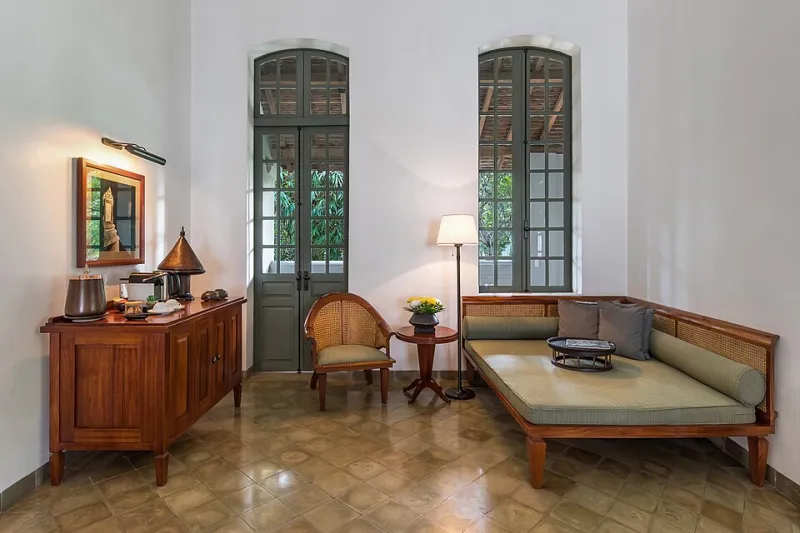
One of the quickest ways to make a small room feel bigger is to show more floor. Furniture raised on legs — 15cm or more — lets light and sightlines continue underneath. Beds, sofas, sideboards and bedside tables all benefit. If you are buying a bed, an exposed frame with space beneath can double as storage without the hulking presence of a divan.
Wall-hung pieces work in the same spirit. A floating oak shelf, a wall-mounted desk or a bespoke alcove cabinet keeps the floor clear and makes the room feel less interrupted. In rented flats, check what you can fix to the wall; in period conversions, find the studs and use the right fixings. A good carpenter will tell you that a floating look still needs solid support behind it.
Choose calm tones and one grain story
In a small flat, wood should be a background note as much as a feature. Pale and mid-toned timbers — ash, oak, maple, birch — tend to reflect more light than deep walnut or stained mahogany. Matte finishes are usually more forgiving than high gloss, which can bounce light around and make every surface feel busier.
Try not to introduce too many competing grains. Two tones can work beautifully; five can look like a salvage yard. Pick a dominant timber and let other pieces play a supporting role. If you already have a dark wooden floor, go lighter above it. If the floor is pale, a mid-toned oak table will ground the room without turning it into a showroom.
Grain direction matters too. A long, straight grain running along the length of a room can reinforce the sense of space. A busy, knotty surface draws the eye and makes a small room feel more compressed. This is not a rule about good or bad wood — it is about choosing the right character for the space.
Storage that earns its floor space
In a compact flat, every piece of furniture is effectively storage or seating or both. A solid wood bench with a lift-up seat, a dining table with drawers, a bed with under-frame boxes: these are the quiet heroes. Measure the internal capacity, not just the external footprint. A 40cm-deep cupboard may hold far more than a 30cm one, but it may also block a doorway.
Go tall where you can. A narrow full-height shelving unit uses vertical space and leaves the floor feeling open. Keep the top third visually light — open shelves rather than closed doors — so it does not loom. In a hallway, a slim console with a mirror above can do the work of a table, a landing strip and a light reflector in one.
Room by room, without the overwhelm
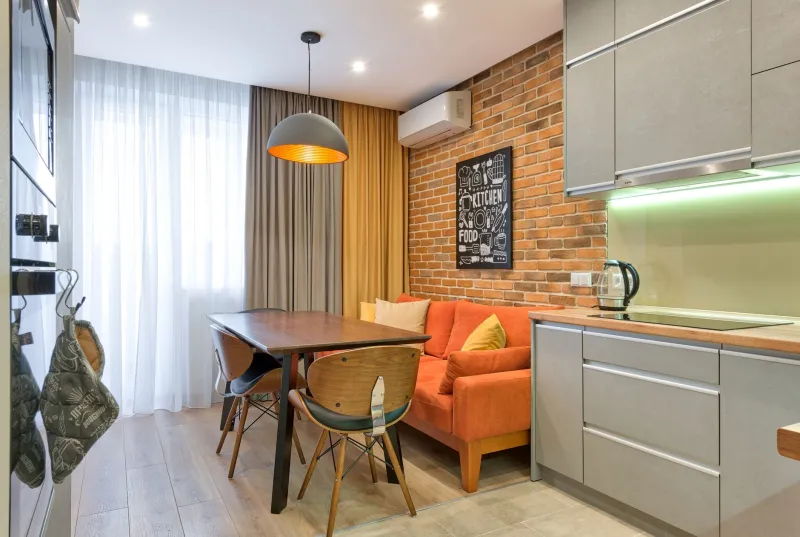
In the living room, start with the sofa. Choose a model with visible legs and a shallow frame, then add a nesting side table rather than a full coffee table if space is tight. A wall-hung media unit keeps the floor clear. In the dining area, a round or oval table is often more sociable and easier to move around than a rectangular one. A 90–100cm round table can seat two comfortably and four at a push.
In the bedroom, a bed frame with space underneath is more useful than a bulky base. Keep bedside tables shallow — 30–35cm is often enough for a lamp, a book and a glass of water. A tall, slim wardrobe beats a low, wide one. In the hallway, measure the door swing before you buy a bench. A 25–30cm console may be all the depth you can afford.
Keep the sightlines clear
Stand in the doorway of each room and look towards the window. What interrupts the view? A tall bookcase, a dark wardrobe or a chunky sofa back can make a small room feel like a corridor. Try to keep the path to the light clear. Low furniture under a window is usually safe; a high-backed chair is not.
Repeat materials rather than matching everything. A pale oak shelf in the living room and a pale oak bedside table in the bedroom create a quiet connection without looking like a catalogue set. In a studio flat, that repetition helps the whole space read as one room rather than a series of zones.
The final measure
Before you order, check the delivery route as carefully as the floorplan. Will the piece fit through the front door, up the stairwell and around the corner? Solid wood is heavy, and a beautiful table that cannot reach the second floor is not a bargain. Allow the wood to settle for a few days before fixing shelves or tightening bolts.
Small flats do not need less wood. They need wood that has been chosen with a tape measure, a critical eye and a little patience. Buy fewer pieces, measure twice and let the timber do the work. Buying fewer, better pieces also sits well with a more sustainable approach: one well-made solid wood table can outlast several flat-pack replacements. That is how a compact UK home starts to feel calmer, more generous and unmistakably yours.