Sticky Fingers, Honest Timber: Solid Wood Furniture for the Toddler Years
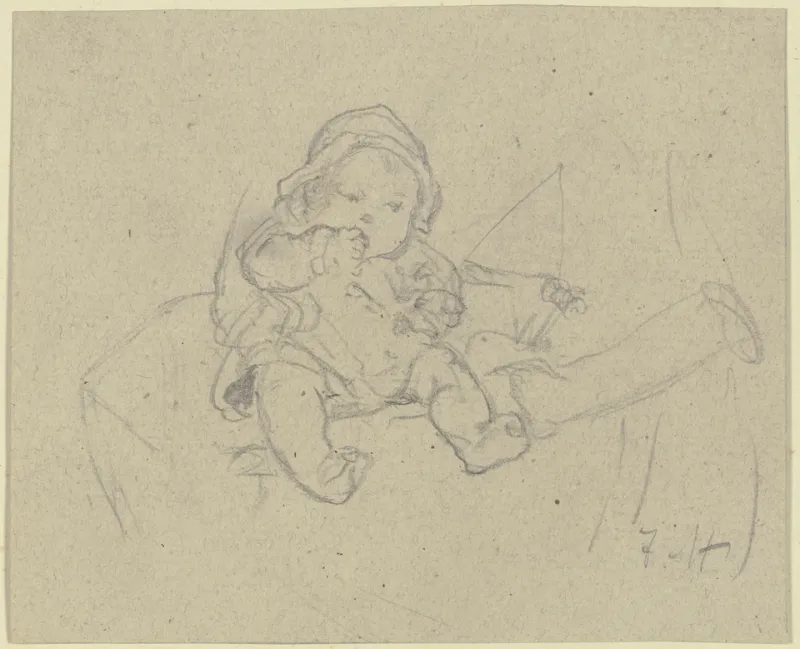
Photo: Happ, Jacob, PDM-owner, via Wikimedia Commons
There is a particular sound that tells you a toddler has found a crayon and a piece of furniture in the same afternoon. It is not quite scratching and not quite drawing. It is the sound of a future family story being made, usually on the dining table you spent ages choosing.
The good news is that solid wood is one of the most forgiving materials you can put in a home with small children. It dents, it stains, it gets sticky — and then, more often than not, it can be sanded, re-oiled or simply lived with. The trick is to choose and care for it with the crayon years in mind, rather than treating every mark as a small domestic emergency.
Start with the finish, not the fear
A finish is the first line of defence, and it pays to know what you are buying. For family furniture, a hardwax oil or a water-based lacquer is usually a sensible starting point. Hardwax oil leaves the timber feeling like timber, and it can be spot-repaired fairly easily. A water-based lacquer gives a more uniform, wipeable surface and stands up well to daily grubby hands.
What I would treat with a little caution is the mystery finish. If an online listing cannot tell you whether a piece is oiled, waxed, lacquered or coated in something unpronounceable, ask. A finish you cannot identify is a finish you cannot easily maintain. High-gloss surfaces can also be a mixed blessing: they wipe clean beautifully, but every sticky fingerprint shows up like a lighthouse.
If you are buying new, ask whether the finish is suitable for children and whether it is food-safe where relevant. You do not need a laboratory report for a hall bench, but you do want to know what you are bringing into the room where your child plays.
Edges, corners and the geography of a playroom
Children do not move around furniture in straight lines. They tumble, pivot and launch themselves sideways. So when you are choosing a solid wood piece for a family room, look at the edges before you fall for the grain.
A softly rounded edge or a small chamfer is kinder than a sharp right angle. This does not mean every piece needs to look like a nursery beanbag. Plenty of well-made oak and ash furniture has a gently eased edge that looks refined and behaves sensibly in a busy room. If you already own a table with unforgiving corners, a fitted corner guard is not a failure of taste. It is just practical parenting.
Height matters too. A low coffee table with a hard edge is a magnet for bumped heads. A slim console in a hallway is less of a hazard than a chunky bench jutting into the walking route. And whatever you choose, anchor tall bookcases and chests to the wall. That is not a wood-care point; it is a basic safety one, and it matters far more than any finish.
The spill drill: what to do before panic sets in
Juice, milk, squash and the occasional cup of tea will land on wood. The important thing is speed and restraint. Blot the liquid with a clean cloth rather than scrubbing it into the grain. A little diluted washing-up liquid on a damp cloth will deal with most everyday spills, followed by a dry cloth.
Do not leave wet cups or damp tea towels sitting on the surface for hours. Water marks on oiled wood often look dramatic but can usually be eased out by drying the area and letting it settle. For a deeper ring, a light rub with a fine abrasive pad followed by a re-oil may be enough — but test on a hidden patch first, especially on veneered pieces.
Sticky food is best removed with a plastic scraper or an old credit card rather than a knife. A knife will take a gouge out of the timber and turn a two-minute job into a sanding job. Warm, slightly soapy water is usually enough. Dry it properly afterwards. Wood does not mind being cleaned; it minds being left wet.
Crayon, felt tip and the art of the gentle rescue
Crayon is mostly wax, which means it often sits on the surface rather than sinking in. Let it harden, then lift it with a plastic card. A hairdryer on a low setting can soften stubborn wax, but keep it moving and do not hold it close enough to damage the finish. Felt tip is a different creature. Blot it quickly, use a damp cloth with a little mild soap, and avoid aggressive solvents unless you know exactly what the finish can take.
On an oiled solid wood surface, a light sanding and re-oil can deal with a determined scribble. On a lacquered surface, you are mostly cleaning rather than sanding. This is why it helps to know what you have. A solid oak table can be refreshed for decades. A thin veneer needs a lighter touch and a bit more patience.
And if a faint ghost of a mark remains? Leave it for a week. Some marks fade as the wood dries and the finish settles. Others become part of the piece. A table that has hosted Play-Doh, birthday cake and a thousand bowls of pasta is not damaged. It is being used properly.
Why repairable beats pristine
This is the quiet argument for solid wood over clever composites. A scratch on a solid timber table can often be sanded back and re-finished. A dent in pine may never vanish completely, but it can soften into the surface. A water mark on an oiled oak top is usually a maintenance job, not a replacement job.
That matters in the crayon years because children are hard on surfaces in ways that are hard to predict. They press down with pencils, push toy cars along the edge and leave cups exactly where you asked them not to. A repairable surface lets you relax. You are not protecting a museum piece; you are looking after a family table.
It also fits the way One Tree Furniture thinks about timber. Wood that can be maintained and kept in use is wood that earns its place. A few marks are not a reason to send a piece to the tip. They are the reason it becomes yours.
A few marks, a lot of history
There is a stage — usually once the crayons have been replaced by homework — when the marks stop looking like mess and start looking like memory. The little blue scribble under the table edge. The faint ring where a juice cup sat during a poorly weekend. The dent from the toy box lid that was definitely not being used as a sledge.
You do not have to embrace chaos. Choose sensible finishes, round off the worst corners, anchor the tall pieces and keep a cloth handy. But do not spend the toddler years trying to keep solid wood in showroom condition. Let it be the table where the drawing happened. In a few years, that will be the point.